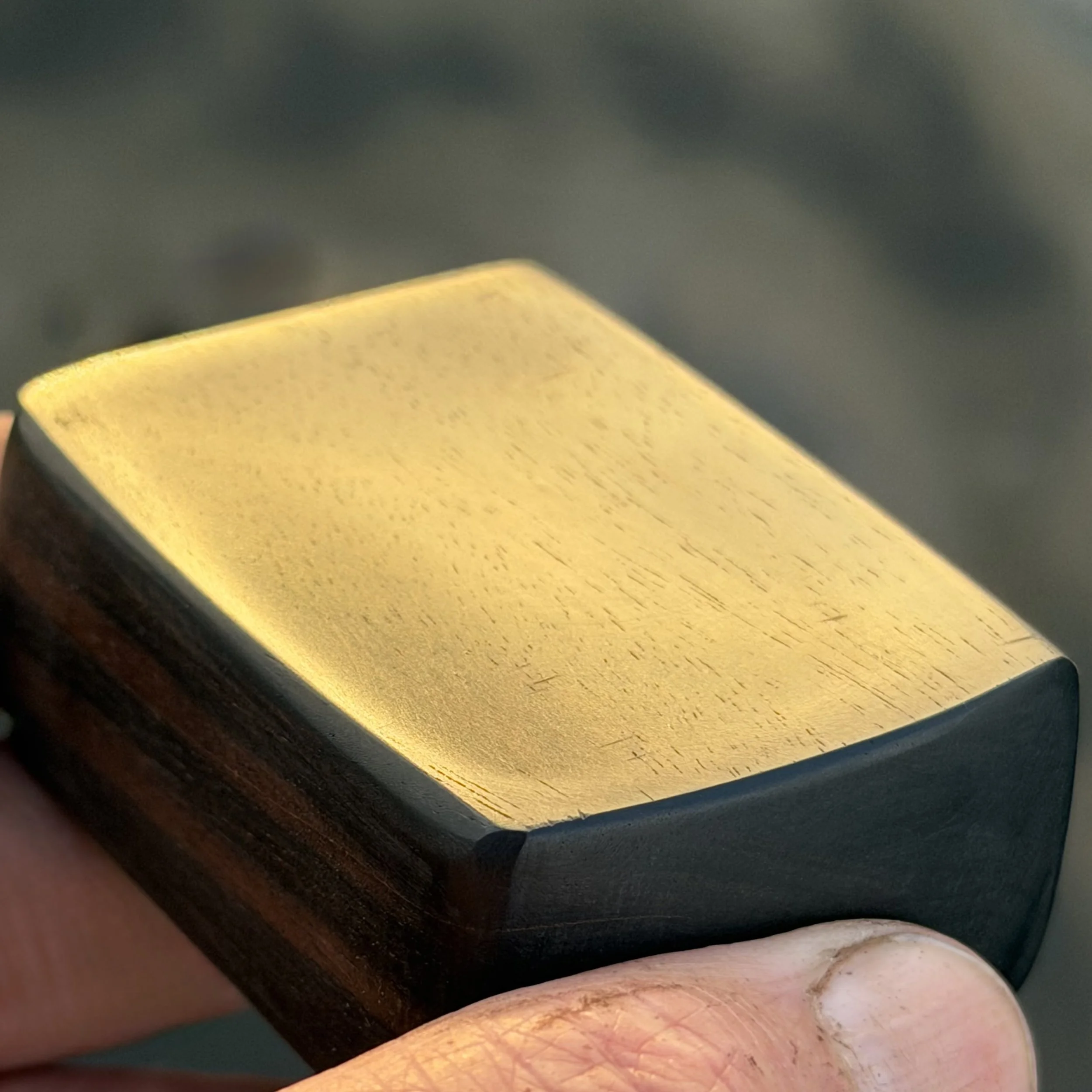
My work begins with the belief that something small and simple can carry enormous purpose, turning art into a force that reaches far beyond the object itself. Its ethical reach is central: the work is intended to generate meaningful support for inner-city communities, poverty, homelessness, racial and social causes, and the environment—devotion over promotion, with each collector becoming part of that purpose. “Less is more” is the axiom: a simple object can become something monolithic when its value is ultimately measured by what it gives back to the world.
Lignum Vitae, the "wood of life," is probably the rarest thing in the universe. Rooted in the idea of Anima, the living essence or spiritual vitality within an object, my sculptures explore the interconnectedness of existence through touch.
Each sculpture is made as a vessel of exchange: as it is held, meaning grows between the object and the beholder. Like the black cat whose fur shines with every caress, the wood deepens in resonance through human contact, creating a quiet reciprocity between giver and receiver.
The works are small but conceptually significant, in stark contrast to the impermanence expressed in Catlan’s banana or Banksy’s shredded painting, both of which reflect decay and impermanence. I see a context in this comparison in which permanence symbolically offers hope, the opposite side of a conceptual bridge.
Also, in a digital world where touch is more utilitarian than not, interacting with these sculptures is pure. In other words, I believe we’ve diminished our sense of touch and therefore our spirit because our rituals have been dulled by the inorganic use of holding phones, tools, keys, remotes, drinks, etc.
Influenced by Aristotle's concepts of telos and entelechy, my sculptures reflect the belief that all things possess an inner force moving toward fulfillment. Through tactile experience and contemplation, the works invite a perceptual awakening—suggesting that objects can hold more than the sum of their material elements. That hope, intention, and spiritual presence remain inseparable from the natural world.
Carved from the "wood of life," each piece stands as both meditation and tribute: a reflection on permanence, impermanence, and our planet's fragile uniqueness.